On 21 May 1952, Mr. D. Schut delivered a lecture to the Calvinist Jurists Association. It was, as he himself acknowledged, a precarious undertaking. For what does Calvinism actually have to say about something as prosaic as the rules of a lawsuit?
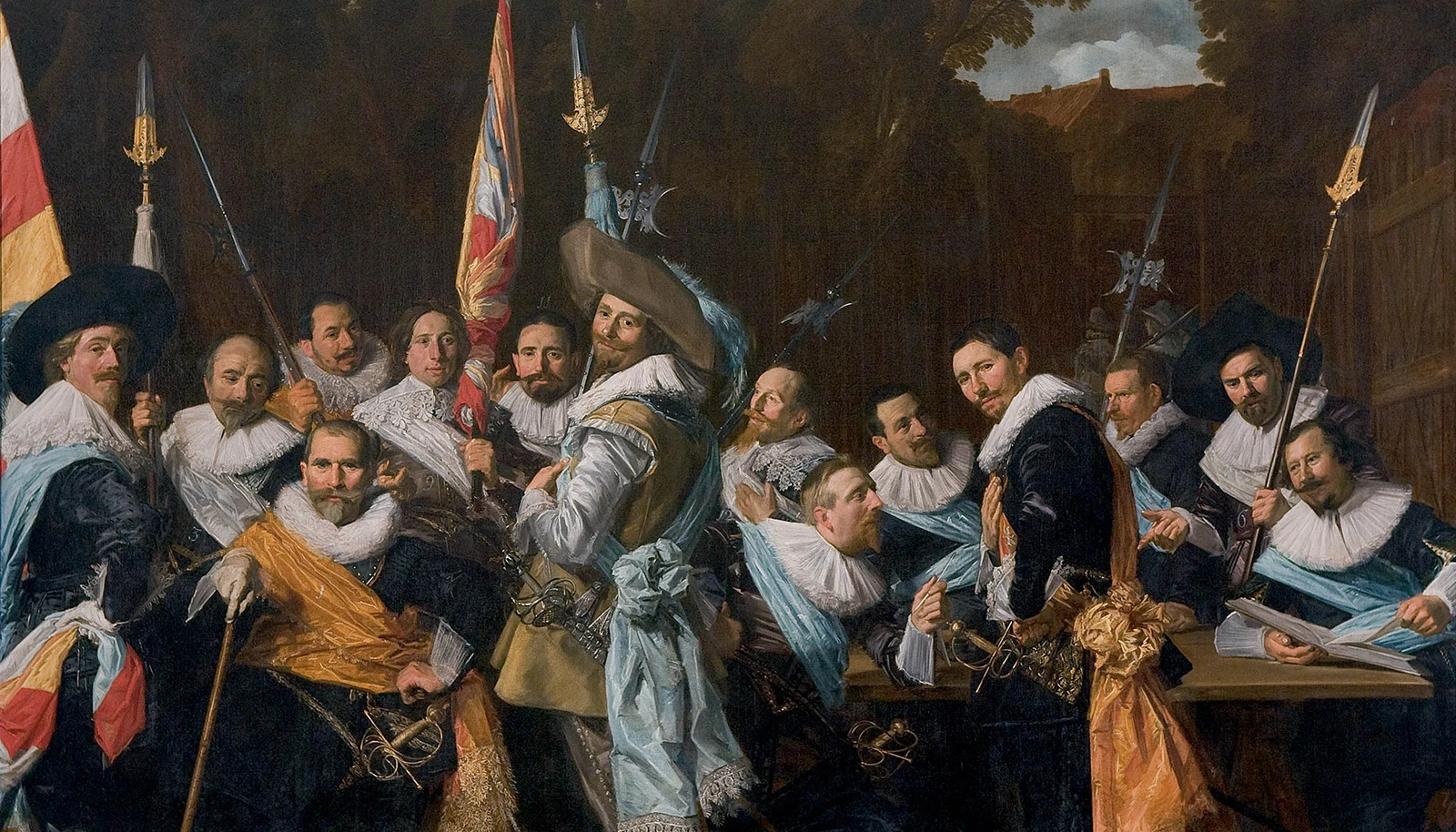
The Netherlands has a long Calvinist tradition. Walk through the old centre of Amsterdam, past the Westerkerk or the Zuiderkerk, and you feel it: this is a country shaped to its core by the Reformation. Protestantism didn’t just transform the church – it transformed education, politics, art and, less well known but no less fascinating, the law.
But how, exactly? That is the question the Amsterdam jurist D. Schut posed in 1952 in a remarkable pamphlet: Calvinistische beginselen en burgerlijk procesrecht (Calvinist Principles and Civil Procedure). It is a text as interesting legally as it is theologically, and one that says a great deal about how Dutch people of that era thought about the relationship between faith and society.
An Honest Opening: Calvin Himself Didn’t Do It
Schut opens with a surprising admission. Calvin himself – the man after whom Calvinism is named – nowhere in his extensive reform of Geneva’s court system explicitly applied “Calvinist principles” to procedural law. He simply tried to introduce good rules, without expressly linking them to his theology.
The Dutch neo-Calvinists of the nineteenth and early twentieth centuries – thinkers such as Abraham Kuyper and his political heirs – likewise focused, on the subject of the judiciary, almost exclusively on criminal law. About the rules of civil procedure – how parties bring their disputes before a judge, how evidence is presented, how a judgment is reached – they wrote very little.
And there is yet another problem: the Bible itself provides no concrete legislation on this specific terrain. Luther had said something rather ungenerous about the Old Testament (“der Juden Sachsenspiegel”), but even those who take the Old Testament seriously as a legal source must acknowledge that its legal rules were written for theocratic Israel, not for a modern constitutional state.
And yet, says Schut, there is much to say. Not through concrete Bible verses prescribing how a civil case should run, but through the broader biblical vision of God, humanity, government and justice.
What Is Civil Procedure, Anyway?
Before going further, a brief detour. Civil procedure – what Dutch lawyers call burgerlijk procesrecht – is something most people rarely encounter consciously, yet it structures their entire lives.
Suppose your neighbour damaged your car and refuses to pay. Or a company delivers faulty goods and won’t refund your money. Or you and your ex-partner disagree about dividing the family home. You can take the matter to court. But how that works – how you start a case, what evidence you may submit, how the judge may rule, how the judgment is enforced – all of this is governed by civil procedure.
Schut defines it as: the body of rules determining how a citizen can enforce the rights he has under civil law. It is about restoring or upholding those rights through the state. Two major components: the procedure itself (how do you obtain a judgment?) and enforcement (how is that judgment actually carried out?).
The Three Calvinist Anchors
Schut identifies three fundamental biblical notions that – indirectly but essentially – bear on civil procedure.
1. The Holiness of God’s Name
In the Dutch civil procedure of 1952, the oath played a major role. Witnesses were sworn in, and parties could take a “decisory oath” that bound the judge to his verdict. This may sound archaic, but the idea is ancient: by calling God as witness, you oblige yourself to tell the truth.
From a Calvinist perspective, this is a double-edged sword. On one hand: if you invoke God’s name in a lawsuit, you must take that seriously – you may not take His name in vain. On the other hand: the procedure must then genuinely be aimed at the truth. The “decisory oath” – by which one party imposes an oath on the opposing party as a procedural last resort – is therefore problematic for Schut. That oath no longer serves to confirm the truth but to break a legal deadlock. It thereby becomes a “procedural deus ex machina,” a cheap trick that abuses God’s name.
2. The Sinfulness of Man
This is a core teaching of Calvinism: humanity is fallen, fallible, prone to self-deception and the pursuit of self-interest. This may sound bleak, but it has concrete and sobering consequences for civil procedure.
In a lawsuit, every party tends to put its own interests first. That is human and understandable. But the rules of procedure must account for it. They must on one hand protect against lies and deceit, while on the other hand maintaining a certain trust in human beings – because without that minimal trust, you simply cannot decide a dispute. Witness statements, expert reports, party declarations: all presuppose that people, even imperfect ones, sometimes tell the truth.
The judge himself is sinful and fallible. That is precisely why the right of appeal exists. It is, Schut writes dryly, “an eloquent testimony” to that fallibility. The Bible does call judges “gods” (Exodus 22), but they are also human. That must never be forgotten.
3. The Task of Government
This is where the argument becomes truly philosophical. What is the task of government? The traditional answer: maintaining the legal order. But Schut finds this too vague and too dangerous.
He reads in the Bible – and he cites extensively from both the Old and New Testaments, as well as Calvin’s Institutes – that government is primarily charged with maintaining order and peace. Not necessarily “the law” in an abstract sense. That may sound like the same thing, but it is not. Because if the primary task is order, then the judiciary is a means, not an end in itself.
This has large practical consequences. If the state is there to enforce the law, it should be able to initiate and conduct lawsuits itself. But if its task is order, then civil justice by definition requires the initiative of the citizen. Your neighbour damaged your car? That is for you to act on, not the state.
Calvinism in the Courtroom: Concrete Applications
From these three principles, Schut develops several concrete themes that touched Dutch civil procedure in his time – and that remain relevant today.
The Independence of the Judge
If the judiciary exists to realise the law – and not primarily as an extension of the executive – then the judge must be absolutely independent. Schut is unequivocal here. He flatly rejects conceptions that cast the judge as a “co-administrator” or as an executor of government policy.
That he references the practice of his own time is telling. The legislature had by then given judges ever-greater powers in tenancy and agricultural lease cases, where the judge was no longer merely applying the law but weighing interests and effectively making policy. Understandable, writes Schut, but fundamentally wrong: the judge is an independent settler of disputes, not a policymaker.
The Equality of Parties
Dispensing justice also means dispensing it fairly. Both parties must have equal weapons. In 1952 this was far from self-evident: the costs of litigation were high, and the poor could not enforce their rights. The legal aid system was a first answer – and, from a Calvinist perspective, Schut argues, a necessary one. The Bible is explicit: “You shall do no injustice in judgment; you shall not be partial to the poor or defer to the great.”
The Passivity of the Judge
A classic principle of Dutch civil law is that the judge is “passive”: he rules on the basis of what the parties submit and may not go beyond the limits of the dispute as defined by them. He does not conduct his own investigation, does not seek what the parties really wanted, keeps to what has been placed before him.
Schut defends this principle but nuances it in an interesting way. If both parties agree that the judge should do more, then he must respect that and hold back. The judge is ultimately placed at the disposal of the parties, not the other way around.
But the state itself is not automatically passive, Schut emphasises. In exceptional cases – think of a judgment that would shut down a factory crucial to national defence – the state may intervene. That is not then arbitrary but a matter of maintaining order. Compensation must of course be paid. The comparison with expropriation is obvious.
Summary Proceedings
Anyone who has ever been in a conflict requiring swift action – an imminent insolvency, an unjust eviction, a dangerous product on the market – knows summary proceedings (kort geding). The judge in such proceedings can quickly grant a provisional measure, even before the main case has been heard.
Schut sees summary proceedings as the acknowledgement of a biblical principle: slow justice is also injustice. “Prolonged justice is also a form of injustice,” he writes. Procedure must serve society, and if a final judgment takes years while someone suffers serious harm in the meantime, the system has failed.
The Mediating Judgment
One of the most striking passages in the pamphlet concerns the so-called “mediating judgment.” The great Dutch legal scholar Paul Scholten had declared: “A mediating judgment is always injustice.” By this he meant: the judge must decide who is right, not impose a compromise that leaves both parties half-satisfied.
Schut acknowledges the force of this argument – but believes it is nonetheless too absolute. Sometimes, he writes, the judge genuinely cannot determine which party is right. The facts are unclear, the burden of proof is evenly balanced, the legal question is nuanced. In such a case, a fair compromise is better than an unconvincing binary verdict. The “black-and-white framework” the judge must then apply “repeatedly fails to match the grey reality in which we live.”
The Duty of Truth
Are parties in a civil case obliged to tell the truth? The question seems obvious, but it is legally far more complicated than it appears.
Schut is nuanced here. Parties are not obliged to tell the whole truth – they are obliged to state the facts on which they base their claim or defence. If you are a creditor demanding repayment, you are not obliged to mention that you subsequently granted the debtor an extension. That is not dishonest; it is the essence of an adversarial system: each party pleads its own case.
The duty of truth – to the extent it exists – means that what you assert must not be demonstrably false. And even for that: if you assert something false, you lose your case because you cannot discharge the burden of proof that rests upon you. The sanction is therefore already built into the system.
Schut is critical of authors who advocate a more far-reaching duty of truth. If parties are obliged to mention facts that help the opposing party, every summons becomes a tome. And then, he notes tartly, it “stands precisely in the way of a good conduct of proceedings.”
Why This Pamphlet Is Still Worth Reading
It is 1952. The Netherlands is barely recovering from the Second World War. The country is still in large measure organised along religious lines – in “pillars” (the Protestant, Catholic, socialist and liberal pillar). Lawyers in that context debate whether and how their religious convictions bear on their field.
That may sound dated. But the questions Schut raises are anything but.
What is the function of a judge – a neutral finder of fact, an enforcer of the law, or a servant of social order? How independent must the judge be from the executive branch? When is a compromise better than a clear-cut ruling? How does procedural truth relate to factual truth? Should the state intervene actively if a judgment threatens public order?
These are questions that arise in every democratic constitutional state, whether Calvinist or not.
What Schut does – and this is his strength – is anchor these questions in a coherent vision of humanity and society. Man is fallible, therefore so is the judge. Government serves order but is not the sole custodian of justice. Procedure is a means, not an end. And the law must ultimately serve society – not the other way around.
That is, with or without biblical citations, a timeless message.